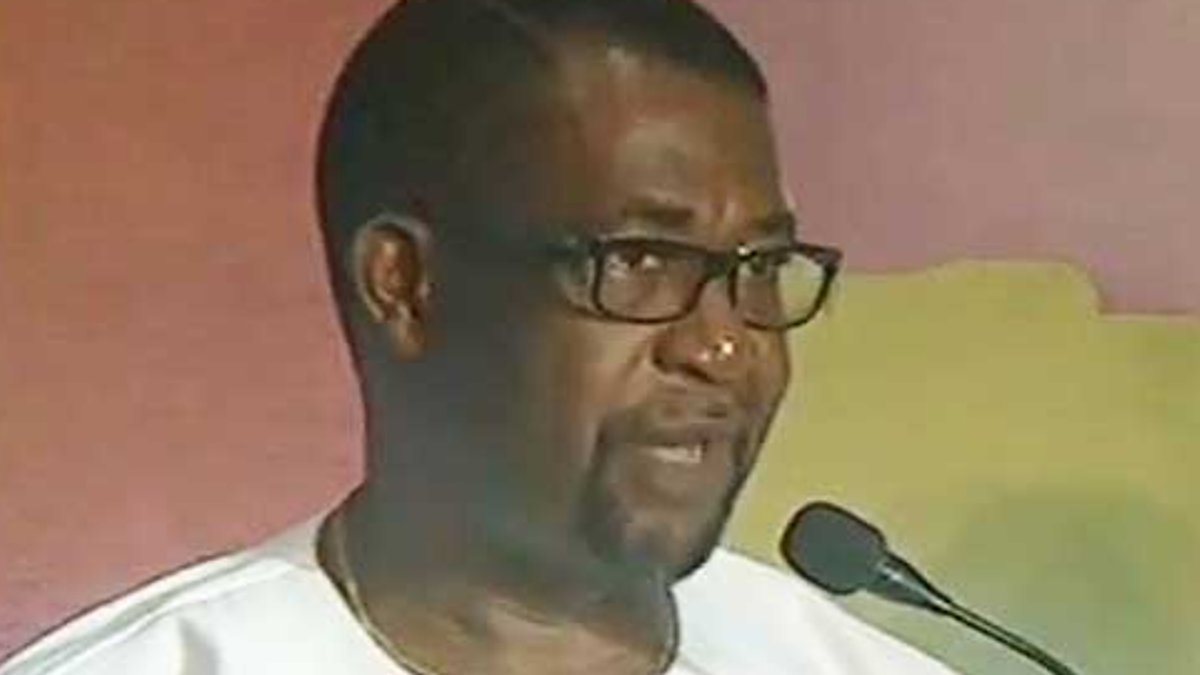
A former Nigerian minister has stated in court that the Mambilla Hydroelectric Power Station contract issued in 2003 by his predecessor lacked the required Federal Executive Council (FEC) approval, was therefore, in his view, null and void. Liyel Imoke, who served as Minister of Power and Steel from 2003 to 2007, testified in Abuja on Monday that the deal-signed by Olu Agunloye-was never approved by the FEC and thus had no legal force.
Agunloye now faces seven criminal charges in the Federal Capital Territory High Court, including disobeying a presidential directive, forgery, conspiracy, and accepting ₦5 million in bribes from Sunrise Power and Transmission Company Limited, the contractor for the project. The planned 3,960-megawatt facility, developed under a Build, Operate and Transfer (BOT) model, became a major issue in Nigeria’s energy sector after former President Olusegun Obasanjo accused Agunloye of bypassing FEC approval.
Imoke explained during cross-examination that he did not cancel the contract when he took office in July 2003 because it was already void due to the missing FEC approval. He stated that a contract awarded in contravention of the FEC would not require cancellation. “The minister does not have the power to award a contract,” he told the court. “It is null and void as far as the FEC and the presidency did not give approval to the award of the contract.”
Related Post: Nigeria’s Supreme Court Revives Debt Action After Acknowledgment
The EFCC’s case centres on the May 2003 award of the Mambilla Hydroelectric Power project to Sunrise Power and Transmission Company Limited. According to Imoke, the FEC minutes showed that the council had directed the then minister to withdraw his memorandum on the project and invite additional proposals so that the government could consider alternative investment arrangements. “I read the deliberations and the directives from the FEC to the then Minister of Power and Steel, which stated that the memo of the defendant be withdrawn and directed the Minister to invite more proposals with a view to ensuring constructive deliberations and to explore various investment options,” he said. Imoke said his review led him to conclude that the contract had not received FEC approval, after which he communicated the position to Sunrise Power.
During cross-examination, Agunloye’s defense counsel, Adeola Adedipe (SAN), questioned whether Imoke had an obligation to report the alleged irregularities. Imoke admitted he did but noted the court ruled that determining criminal liability was beyond witness testimony. When asked if he had reported the contract’s irregularities to the FEC, Imoke replied: “No, I did not.”
Obasanjo’s Accusations and Tribunal Ruling
The Mambilla project has faced controversy for years. In 2023, Obasanjo publicly accused Agunloye of awarding the contract without proper approval, a claim Agunloye denied, portraying himself as a scapegoat in Nigeria’s ongoing arbitration with Sunrise Power. An international tribunal in Paris later ruled in Nigeria’s favor, citing bribery and fraud in the contract’s award. The criminal trial before Justice Jude Onwuegbuzie remains separate from those proceedings.
Agunloye, who pleaded not guilty to all charges, was declared wanted by the Economic and Financial Crimes Commission (EFCC) in December 2023 and later presented himself for questioning. His legal challenges extend beyond the criminal case: in March 2024, a Federal High Court dismissed his lawsuit against the EFCC for alleged rights violations, though a separate FCT High Court ruling in October 2026 found the EFCC liable for defamation in another matter, awarding him ₦10 million in damages.
Related Post: Pakistan’s New Court Faces Old Legal Challenges
Legal Battles Beyond the Criminal Case
Justice Onwuegbuzie granted the request, setting the next hearing for November 2, 2026. So far, the EFCC has presented six witnesses, including Umar Babangida, an investigator who testified that Obasanjo had expressed willingness to cooperate if his evidence was necessary. Whether the former president will testify remains uncertain.
The prosecution’s case centers on FEC minutes from May 2003, which show the council had not approved the Mambilla contract to Sunrise Power, contrary to Agunloye’s later claim of FEC clearance. The minutes instead directed him to withdraw the project’s memorandum and solicit additional proposals—a directive Imoke confirmed upon reviewing the file in September 2003. The prosecution argues that Agunloye’s subsequent actions, including signing a letter falsely claiming FEC approval and forging related documents, violated Nigeria’s Public Procurement Act.
Prosecution’s Case on Forged Documents
The trial resumed after the prosecution requested an adjournment to address an urgent matter, with the next hearing scheduled for November 2, 2026. Agunloye remains wanted by the EFCC and was arraigned multiple times following amended charges in January 2024, February 2024, and September 2025. The case continues to proceed independently of the arbitration, where the tribunal’s findings did not address the criminal allegations against him.


