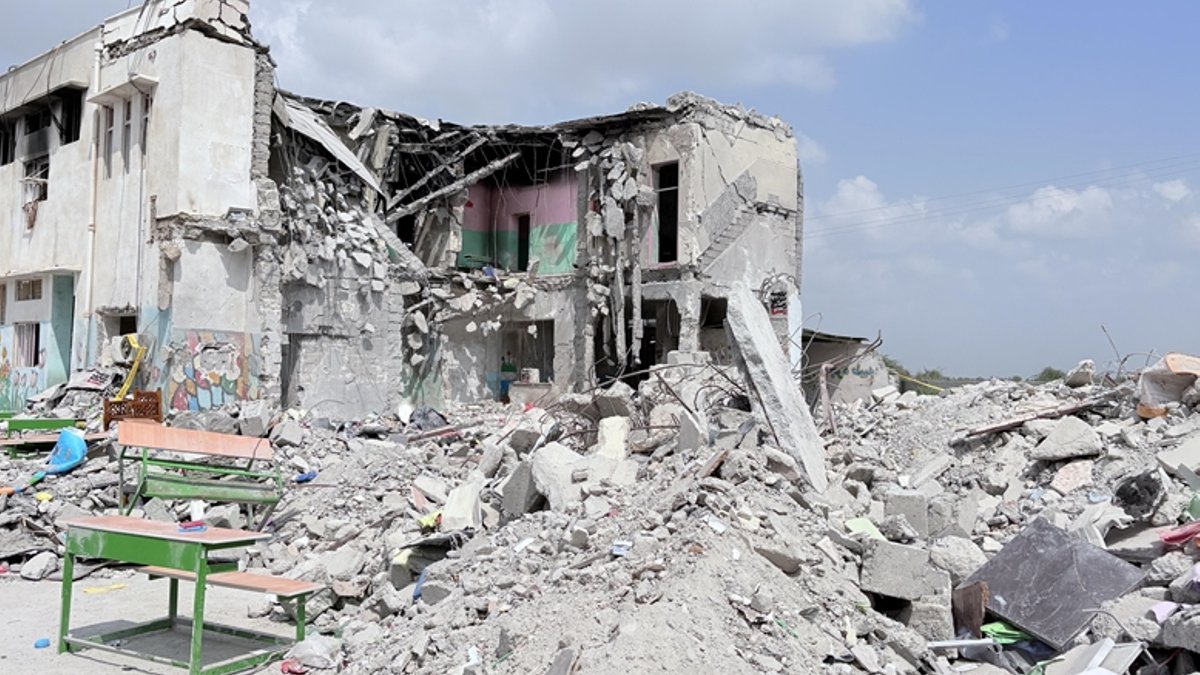
The US and Israel conducted a strike against Iran on February 28, 2026, eliminating Ayatollah Ali Khamenei, the country’s Supreme Leader. The operation was presented as a preventive measure to halt Iran’s nuclear ambitions but breached fundamental international law principles in both its reasoning and execution. The assault hit civilian sites—schools, hospitals, bridges, and a major stadium—while threatening to disable Iran’s power grid, risking a collapse into what officials called a “stone age” scenario. Legal analysts now examine whether the attack qualifies as aggression under the UN Charter and whether its methods violated armed conflict regulations.
Lack of Legal Justification for the Attack
The UN Charter’s Article 2(4) explicitly prohibits the use or threat of force against another state’s sovereignty, a rule reinforced by customary international law. The International Court of Justice (ICJ) affirmed this in Nicaragua v. United States, stating that even coercive threats—such as those issued by the US and Israel, violate this norm unless approved by the UN Security Council or justified under Article 51’s self-defense provision.
Self-defense requires proof of an “armed attack”—a clear, imminent threat. Iran had not attacked Israel or the US, nor did it present an immediate danger. Instead, the strike relied on “preventive self-defense”, a concept not recognized under international law. The ICJ further clarified in Armed Activities on the Territory of the Congo that self-defense cannot be invoked to preemptively strike based on speculative future risks. As a result, the attack lacked any legal basis under the UN Charter or established customary rules.
The operation may also constitute an act of aggression under UN General Assembly Resolution 3314 (XXIX). This resolution defines aggression as invasion, bombardment, or attacks on another state’s territory, along with threats to its political independence. It explicitly states that no political or military outcome, even regime change, can justify aggression. Historical cases, including the Nuremberg International Military Tribunal and International Military Tribunal for the Far East, classified war of aggression as the “supreme international crime”, punishable under international law. While individual accountability would require jurisdiction from the International Criminal Court (ICC), the state-level violation is undisputed.
Related: Petition Seeks Stricter Social Media Rules for Minors
Civilian Casualties and Potential War Crimes
International Humanitarian Law (IHL) demands that armed conflicts respect the principles of distinction, proportionality, and precaution. The Geneva Conventions and Additional Protocol I bar attacks on civilians, civilian infrastructure, and survival-critical facilities like hospitals, schools, and power grids. The US-Israel strike violated these standards in multiple ways.
Reports indicate significant civilian damage, including attacks on schools, hospitals, bridges, and residential areas, while officials threatened to destroy Iran’s electricity infrastructure, a move that would deprive civilians of essential services.
Statements from US and Israeli leaders worsened the violations. Officials warned of pushing Iran into a “stone age”, while threats were made against civilian infrastructure. These declarations, combined with the destruction’s scale, indicate a deliberate disregard for distinction—civilians versus combatants, and proportionality—military necessity versus civilian harm. Under Article 54(2) of Additional Protocol I, attacking objects vital to civilian survival, such as food, water, or medical facilities, is prohibited unless they directly support military operations. The strikes on hospitals, bridges, and power grids appear to breach this rule.
Even if some targets had mixed civilian-military functions, the precautionary measures required by Article 57 of Protocol I were ignored. Attacks must be planned to avoid civilian casualties. The indiscriminate nature of the strikes, paired with explicit threats to starve the population, strongly suggests war crimes, including deliberate starvation as a weapon.
Related: Pakistan’s New Court Faces Old Legal Challenges
Legal and Regional Ramifications
The consequences for the US and Israel depend on whether the International Criminal Court (ICC) or another tribunal asserts jurisdiction. Iran could pursue state responsibility claims through the UN Security Council, though political barriers may delay action. In the short term, the strike has heightened regional tensions, possibly drawing in additional actors. Sanctions, retaliatory strikes, or prolonged conflict could follow, but the core legal issue remains unchanged: the attack was unlawful under existing norms, and its civilian toll implies intentional violations of war law.
The immediate focus shifts to the destruction’s scale. Iran’s economy and infrastructure face years of recovery, while the humanitarian impact, including trauma from strikes on schools and hospitals, will persist. The architects of the attack may argue it was necessary to stop a nuclear-armed Iran, but international law does not permit preventive war as justification. The legal framework is settled: aggression and war crimes carry consequences, even if enforcement remains uncertain.
The strike’s long-term impact will hinge on whether the international community enforces accountability. For now, the destruction remains the defining outcome, a deliberate breach of norms with lasting consequences for Iran’s population and the principles governing armed conflict.


